If you’ve purchased general liability (GL) insurance for your business, you’ve done something important. GL is the foundation. It protects you when a customer slips in your store, a contractor damages a client’s property, or an advertisement triggers a copyright claim. Most lenders, landlords, and clients require it — for good reason.
But here’s what many small business owners don’t realize until it’s too late: general liability only covers what you do to others. It doesn’t cover what happens to your business. Your equipment, your inventory, your building, your income — a GL policy alone won’t protect any of that. A fire, a break-in, or a burst pipe can shut you down for weeks. Your GL policy won’t pay a single dollar of those recovery costs.
This guide gives you the full picture. We’ll walk through property and casualty (P&C) insurance: what it is, what it includes, and how the different coverage types fit together. By the end, you’ll understand not just what you have, but what you might be missing.
What Does General Liability Insurance Actually Cover?
General liability insurance, often called GL or CGL (commercial general liability), protects your business against claims from third parties. That includes customers, vendors, visitors, and the general public. It covers three core categories:
- Third-party bodily injury: A customer trips on a wet floor in your shop and breaks their wrist. GL covers the medical expenses and any resulting lawsuit.
- Third-party property damage: Your plumber accidentally cracks a client’s expensive tile while on a job. GL covers the repair.
- Personal and advertising injury: Your marketing materials unintentionally infringe on a competitor’s trademark. GL covers the legal defense and settlement.
What GL does not cover is just as important to understand. Your own property, like the equipment you use every day, your inventory, your office furniture, and your building. A GL policy won’t cover any of it if something goes wrong. Your income won’t get any protection if a covered event forces you to close temporarily. And GL doesn’t cover your employees for work-related injuries. That’s the territory of workers’ compensation insurance.
Read more about general liability coverage.
What Is Property & Casualty Insurance?
Property and casualty (P&C) insurance covers two related but distinct types of risk:
- Property insurance protects your physical assets — your building, equipment, inventory, and furnishings. It covers damage or loss from fire, theft, vandalism, and certain weather events.
- Casualty insurance (liability) protects your business from legal responsibility when your operations, products, or employees cause harm to others.
General liability is one type of casualty coverage — a critical one, but just one piece. P&C is the broader framework covering the full range of protection a business needs: what happens to your stuff, and what happens when your business harms someone else.
For small businesses, the most common entry point into both property and casualty coverage is a Business Owners Policy, or BOP.
What Is a Business Owners Policy (BOP) — and Do You Need One?
A Business Owners Policy (BOP) is a bundled insurance product built for small to midsize businesses. It typically combines two core coverages:
- General liability insurance (casualty coverage)
- Commercial property insurance (property coverage)
Many BOPs also include business interruption insurance. That coverage pays for lost income and ongoing expenses if a covered event forces your business to close temporarily — more on that below.
A BOP is generally a good fit if your business has a physical location, owns equipment or inventory, and interacts with customers or the public. You’ll often get broad foundational coverage at a lower combined premium than buying those policies separately.
That said, a BOP is not a complete solution on its own. It typically leaves out workers’ compensation, professional liability (errors & omissions), commercial auto, and cyber liability coverage. You typically buy those separately — and for many businesses, they’re just as essential as the BOP itself.
Commercial Property Insurance — What It Covers and Why It Matters
Commercial property insurance protects your business’s physical assets when something goes wrong. A fire can damage your office. A break-in can wipe out your equipment. A windstorm can tear off your roof. In each case, commercial property coverage steps in to help you recover.
What it typically covers:
- Your building (if you own it)
- Business equipment, computers, and machinery
- Inventory and stock
- Furniture, fixtures, and improvements to a leased space
One distinction that matters enormously at claim time: the difference between replacement cost value and actual cash value (ACV).
- Replacement cost value: pays to replace the damaged item with a new one of similar kind and quality.
- Actual cash value: pays replacement cost minus depreciation. A five-year-old piece of equipment may be worth far less than what you’d need to replace it.
Most business owners don’t grasp this difference until they file a claim and find their payout is far lower than expected. Make sure you know which basis your policy uses. If your equipment or inventory would be expensive to replace, consider replacement cost coverage.
Note that commercial property policies typically exclude floods and earthquakes. If your business sits in a flood plain or seismic zone, those risks need separate policies.
Business Interruption Insurance — The Coverage Most Small Businesses Don’t Have Until It’s Too Late
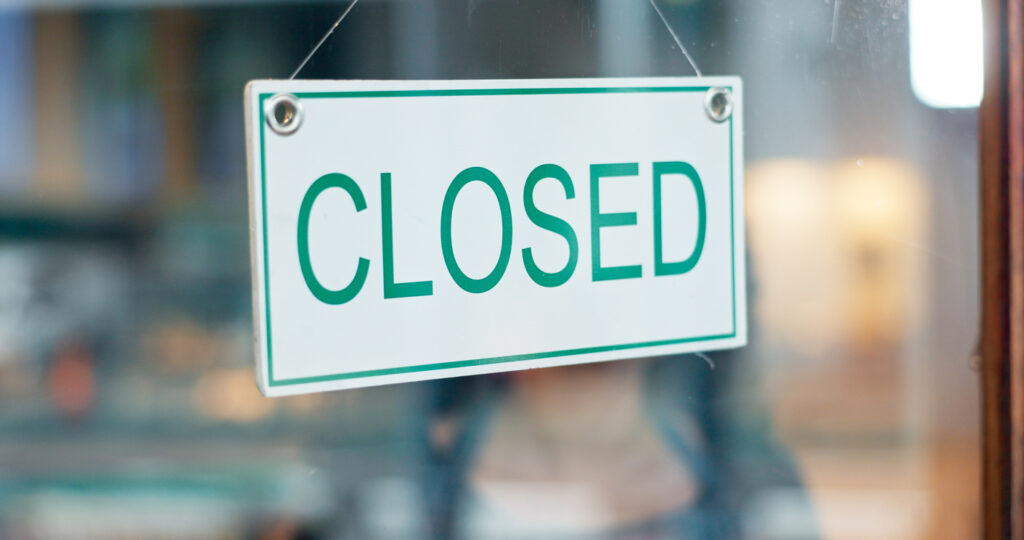
Business interruption insurance — sometimes called business income insurance — covers the revenue you lose when a covered event forces your business to close temporarily. It also covers your ongoing expenses while you’re shut down.
Consider what happens when a fire damages your retail location, and you can’t open for six weeks. Your property insurance covers the repair costs. But what about the revenue you didn’t earn? Your employees still need their pay. Your rent is still due. Your loan payments don’t pause. Business interruption coverage bridges that gap.
This coverage is frequently under-valued. Business owners either assume it’s included when it isn’t, or they treat a temporary closure as too unlikely to worry about. But a pipe bursting on a Sunday night, a supplier fire, or a building violation can close almost any business.
Business interruption coverage often comes as an add-on to a BOP or commercial property policy. If yours doesn’t include it, ask about it.
Other P&C Coverages Small Businesses Should Know About
Depending on your business type, size, and operations, you may need coverages beyond a standard BOP. Here are several worth understanding:
Commercial Auto Insurance
If you use vehicles for business purposes — deliveries, client visits, transporting equipment — a personal auto policy won’t cover business-use accidents. Commercial auto insurance fills that gap. Even if you only occasionally use your own vehicle for work, confirm whether your personal policy covers that use.
Inland Marine / Equipment Floater
Standard commercial property insurance covers assets at your business location. But what about tools, equipment, or inventory that move off-premises? An inland marine policy (or equipment floater) covers those assets in transit, at a job site, or temporarily stored elsewhere.
Umbrella / Excess Liability Insurance
An umbrella policy extends your liability limits above what your primary GL policy covers. A serious claim can exceed your $1 million GL limit — think significant medical costs or multi-party lawsuits. When that happens, umbrella coverage picks up where GL leaves off. It’s a cost-effective way to substantially increase your protection.
How to Think About Coverage Limits — What “Enough” Actually Means
One of the most common mistakes small business owners make: choosing minimum coverage limits to keep premiums low. It’s understandable. Insurance can feel like an expense with no return. But coverage limits are what actually matter when something goes wrong.
Consider a straightforward scenario: a serious slip-and-fall at your business results in a spinal injury. Between emergency care, surgery, physical therapy, legal defense, and settlement, costs can easily reach $500,000 or more. If your GL policy only covers $300,000, your business owes the rest.
The right approach isn’t to assume the worst will happen. It’s to make sure your worst realistic scenario is covered. A good broker will help you think through your specific risk profile: What’s the nature of your business? How many people visit your location? Do you have high-value equipment or inventory? What does a serious claim typically cost in your industry?
At Meslee, this is exactly the kind of conversation we have with every client. Our goal isn’t to sell you more coverage than you need. It’s to make sure the coverage you have actually protects you when it counts. That’s what we mean when we say we’re your advocate.
FAQ — Common Questions About Small Business P&C Insurance
Is general liability insurance required by law?
In most states, general liability insurance is not a legal requirement for all businesses. But many landlords, clients, and licensing bodies require it as a condition of doing business. Certain industries have their own specific insurance mandates. Even where it’s not required, the financial risk of going without GL is significant enough that most business owners treat it as essential.
What’s the difference between a BOP and general liability insurance?
General liability is a single coverage type. It protects your business against third-party claims for bodily injury, property damage, and certain advertising injuries. A Business Owners Policy (BOP) bundles general liability with commercial property insurance — and sometimes business interruption coverage — into one package. Think of GL as one ingredient; a BOP is the recipe.
Does my general liability policy cover employees who are injured at work?
No. GL covers injuries to third parties — customers, visitors, or the general public — not your own employees. Workers’ compensation insurance covers work-related employee injuries. It’s a separate policy, and most states legally require employers to carry it. If you have employees and don’t carry workers’ comp, you face significant legal and financial exposure.
What does P&C insurance typically not cover?
Even a well-structured P&C program leaves certain risks uncovered. Common exclusions include professional errors or negligence (that’s professional liability or E&O), employee dishonesty or fraud (a crime policy or fidelity bond covers that), cyber attacks and data breaches (cyber liability), and intentional acts. Floods and earthquakes also require separate policies. A broker can help you identify the gaps specific to your business.
How much general liability coverage does a small business actually need?
The right amount depends on your industry, customer interactions, revenue, and contract requirements. Many small businesses start with a $1 million per-occurrence / $2 million aggregate policy. But that may not be enough for businesses with high foot traffic, high-value work, or clients who require higher limits. Your broker should assess your specific risk profile — not just hand you a default limit.
What is an umbrella policy, and do I need one?
An umbrella (or excess liability) policy extends the limits of your primary liability coverage. If a claim exceeds your GL limit, the umbrella policy covers the remainder up to its own limit. It’s often one of the most cost-effective ways to increase your liability protection. If you interact with the public, own significant assets, or sign contracts requiring high liability limits, an umbrella policy is worth considering.
The Right Coverage Is a Program, Not a Policy
General liability is an essential starting point. But protecting your business means looking at the full picture — your property, your income, your employees, your vehicles, and the risks specific to your industry. The right insurance program isn’t the cheapest one. It’s the one that’s actually there when you need it.
At Meslee, we help small business owners build coverage programs that fit — not generic policies pulled off a shelf, but thoughtful, complete protection built around how you actually operate. Whether you want a second opinion on your current coverage or you’re starting fresh, we’re here to be your advocate.