Aquaculture has always carried risk that looks different from most commercial operations. Stock lives in open water, exposed to conditions no fence or sprinkler system can control. The risk profile facing fish and shellfish farms today is shifting faster than many existing aquaculture insurance policies account for. Three specific categories are driving most of that change: disease outbreaks, harmful algal blooms, and climate-driven disruption to lease sites. Each raises a different coverage question, worth understanding before your renewal, not your next claim.
Disease Outbreak Events: What Triggers Mortality Coverage
Pathogens like infectious salmon anemia (ISA) sit differently in a policy than a storm or a predator does. Most aquaculture stock mortality policies name disease as a covered peril alongside storms, equipment failure, and predation. But naming a peril and adjusting a claim under it are two different things. Disease losses tend to be the most heavily scrutinized of the group.
ISA is a nationally listed reportable disease in the United States. A diagnosed or suspected case must be reported to state and federal animal health authorities. When that happens, the response is case specific: additional sampling, a biosecurity review, and often a controlled marketing plan that lets the operator sell affected stock early, at reduced value, rather than lose it outright. There is no mandated depopulation and no treatment for ISA. The regulatory system is built around surveillance and containment, not culling.
That distinction matters for coverage. A claim built around dead biomass looks different from one built around a controlled marketing plan, where stock survives but sells early, at reduced value. Before your next renewal, ask your broker:
- Whether disease-caused mortality carries a different sublimit than storm or predation losses
- Whether the policy addresses reduced-value sales under a controlled marketing plan, or only outright mortality
- What diagnostic documentation the carrier requires to establish disease as the cause of loss
Harmful Algal Blooms: A Contamination Event, Not Just a Mortality Event
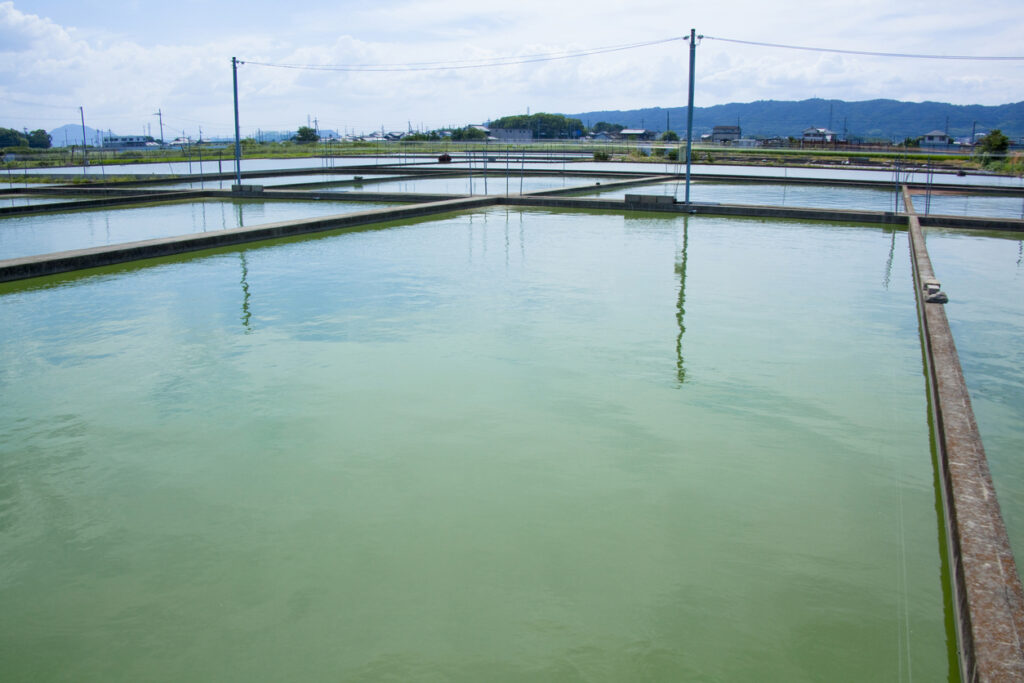
Harmful algal blooms (HABs) are often written into aquaculture insurance stock policies as a named peril, sometimes under the heading of plankton bloom. That coverage responds cleanly when a bloom kills stock outright. In the Pacific Northwest, algal toxins have been linked to mass mortality events in shellfish. But a mass die-off is only one way a HAB causes financial loss, and it is often not the most common one.
More frequently, a bloom forces a harvest closure without killing the stock at all. It delays harvests until shellfish exceed optimal market size, interrupts delivery contracts, and ties up production space that new stock cohorts need. None of that shows up as mortality on a claim form.
That leaves a real question between two coverages built for different purposes. Stock mortality coverage responds to dead biomass. Business interruption coverage works on a different trigger. As the Insurance Information Institute’s guidance on business interruption insurance explains, it generally requires direct physical loss or damage to covered property. A HAB-driven closure is a water quality event, not necessarily physical damage to your facility, and a closure-driven revenue loss can sit between what one policy pays for and what the other is built to trigger. Ask your broker directly:
- Whether business interruption coverage responds to a regulatory or contamination-driven closure, or only to physical damage at the site
- Whether your stock policy accounts for graded or delayed-harvest losses, not only mortality
- Whether a HAB event and a plankton bloom event are the same peril in your policy language
Climate-Driven Lease Site Disruption: When There Is No Single Event
The first two risks share a common structure: a discrete event happens, and a policy either responds to it or doesn’t. Climate-driven disruption to lease site viability does not follow that pattern. Rising water temperatures and shifting seasonal patterns tend to degrade a site’s productivity gradually, over several growing cycles, not in one identifiable incident.
That gradual quality creates a real limitation. The design of insurance policies and lease agreements is for identifiable, fortuitous events, and force majeure language in a lease is no exception. It typically excuses performance when something sudden and unforeseeable makes the lease impossible to fulfill, not when conditions shift slowly enough that no single point in time marks the failure. A site that becomes less viable season over season rarely produces the kind of triggering event either a policy or a force majeure clause might address. Aquaculture coverage requirements and state regulatory involvement also vary by state, which is worth confirming directly through the NAIC’s state insurance department directory if your operation spans more than one.
In a region where temperature and productivity trends shift, the more useful question is the frequency of assessment of a site’s risk profile. RIMS’s guidance on identifying and evaluating emerging risks points to a relevant discipline here. Trend-driven risks reward operations that review exposure on a regular cycle, not only after a loss. Ask your broker how often they benchmark your coverage against current site and species conditions, not just against last year’s renewal.
Reviewing Coverage Against a Moving Risk Landscape
None of these risks are hypothetical, and none are addressed well by a policy that hasn’t been reexamined recently. The SBA’s guidance on business insurance frames coverage as an active part of running a business. It’s something you revisit as conditions change, not a form filled out once and renewed on autopilot. For aquaculture operators, conditions are changing on a timeline that outpaces the standard annual renewal cycle.
A useful starting point is a site-by-site, species-by-species review. Check the named perils in your stock mortality policy, how disease claims are adjusted, whether business interruption responds to contamination-driven closures, and how your lease terms hold up against local climate trends. The right coverage for an aquaculture operation in 2026 is not necessarily the coverage that was right for it three years ago.
Review Your Aquaculture Coverage with Meslee
Meslee works with operators to examine current aquaculture insurance coverage against the risks actually affecting their sites and species: disease-related mortality, contamination-driven closures, and the slower-moving climate trends reshaping lease viability. Contact our team at meslee.com to schedule a coverage review.