
A decade ago, watch dealers had inventory that was priced against wholesale cost and moved through fairly predictable retail channels. That’s no longer the full picture. Certain models now trade on the secondary market the way a security does. That includes published price indices, active bidding, and values that can move noticeably within a single quarter. A Rolex Daytona or a Patek Philippe Nautilus isn’t just merchandise anymore. For a significant share of buyers, it’s a store of value they expect to hold or appreciate.
That shift changes more than pricing strategy. It changes how a dealer’s inventory should be valued and insured. A jewelers block policy built around jewelry generally may not reflect how a watch’s value behaves once it leaves the case.
Actual Cash Value vs. Agreed Value: Why the Choice Carries More Weight for Watches
Most property coverage settles a claim one of two ways: actual cash value or agreed value.
Actual cash value ties the payout to depreciation and condition at the time of loss. As the NAIC explains, ACV coverage pays the cost to repair or replace property based on its value, factoring in age and wear. It often doesn’t cover the full cost of replacing what was lost. That model works reasonably well for goods that lose value in a predictable, linear way: office equipment, most furniture, a car off the lot.
Watches don’t behave that way. A steel sports watch from a sought-after brand can hold or gain value for years. But then it could swing on a change in demand, a discontinued reference, or a shift in a brand’s allocation policy. A depreciation schedule built for ordinary property assumes the wrong direction of travel.
Agreed value works differently. The dealer and insurer agree on a specific value in advance, typically based on a current appraisal. If a covered loss occurs, that’s the number the policy pays, regardless of what the secondary market did in the meantime.
For a dealer holding pieces that could be worth meaningfully more, or less, than last year’s valuation, agreed value sets the number before the loss. There’s nothing left to argue about after it.
Authentication and Provenance: A Risk Underwriting Doesn’t See on Its Own
Jewelry theft and jewelry misrepresentation are different problems. Watch dealers face a version of the second that has grown more sophisticated. Counterfeit movements built to pass a casual inspection, genuine cases paired with non-original parts, and pieces with incomplete or altered service histories.
This affects coverage in two ways. An insurer valuing a watch at authentic-market price is underwriting on the assumption that the piece is what the dealer says it is. A misrepresented or altered piece complicates that valuation before any loss occurs. And at claim time, a dealer without documented provenance may face a slower, more contested claims process, since the insurer has to establish what was lost, not just that something went missing.
For each piece above a set value threshold, dealers should keep the original box and papers where available, service records from an authorized source, a current written appraisal, and photographs documenting condition and identifying marks, including serial and reference numbers. None of this is paperwork for its own sake — it’s the record that lets a claim move on the facts instead of stalling on a dispute over what the dealer had.
Valuation in a Market That Doesn’t Wait for Renewal
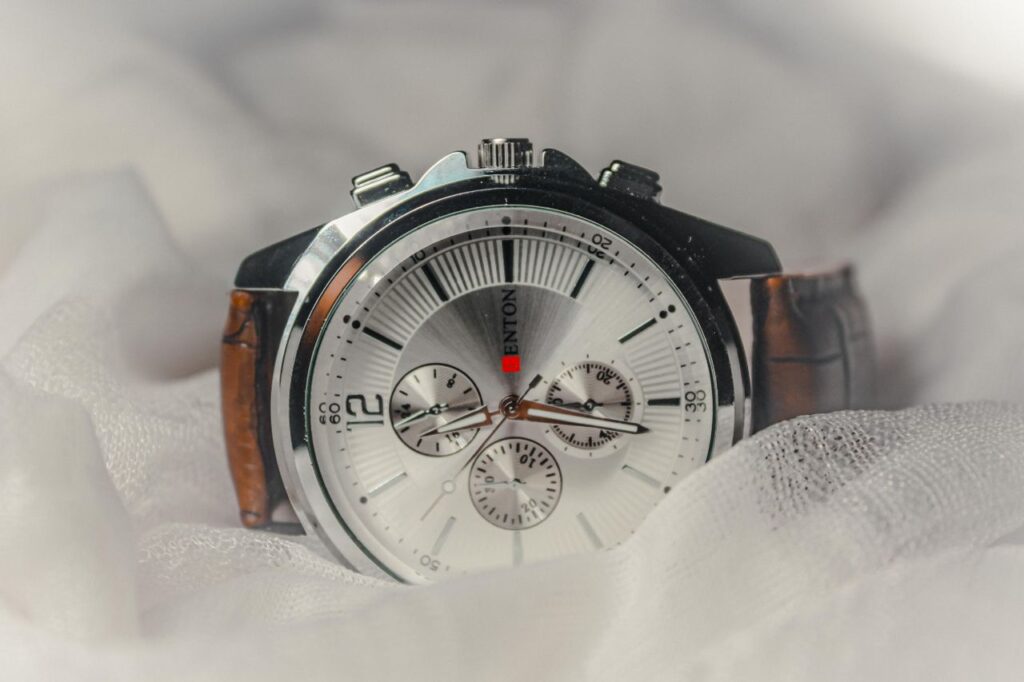
A standard commercial policy typically revisits inventory values once a year, at renewal. For most retail categories, that cadence works. The secondary watch market moves faster than that. The NAIC’s guidance on valuation and coverage limits applies here too. A coverage figure is only useful if it reflects current value, not a number carried forward from the last review.
Collector sentiment, a discontinued reference, or a brand’s production decision can shift a specific model’s resale value well before the next renewal date arrives. A dealer whose insured values were set a year ago, and haven’t moved since, may be carrying a policy that no longer reflects either direction of that change. Underinsured on pieces that appreciated, overpaying on premium for values that have since dropped.
This differs from the general underinsurance problem that affects most commercial property, where replacement costs tend to drift upward slowly. Watch values can move in either direction. They can move quickly enough that an annual review is already behind the market by the time it happens.
What This Means for Your Coverage
If your inventory includes watches held for resale as an investment category, you should confirm a few things with your broker:
- Whether your policy is written on an agreed value basis for higher-value pieces, and what documentation the insurer requires to establish that value
- How often your scheduled values are reviewed, and whether that cadence matches how quickly your specific inventory moves in the secondary market
- What provenance and authentication documentation your insurer expects to see at claim time, and whether your current recordkeeping would hold up under that standard
None of this assumes the worst. It’s about making sure a coverage decision made at renewal still holds up if a claim happens eleven months later.
Meslee works with jewelry and watch dealers. We build coverage around how high-value inventory trades today, not a generic jewelers block template. If you haven’t reviewed your policy since your inventory mix shifted toward watches, that conversation is worth having.
Talk to a Meslee advisor about reviewing your specie coverage.